
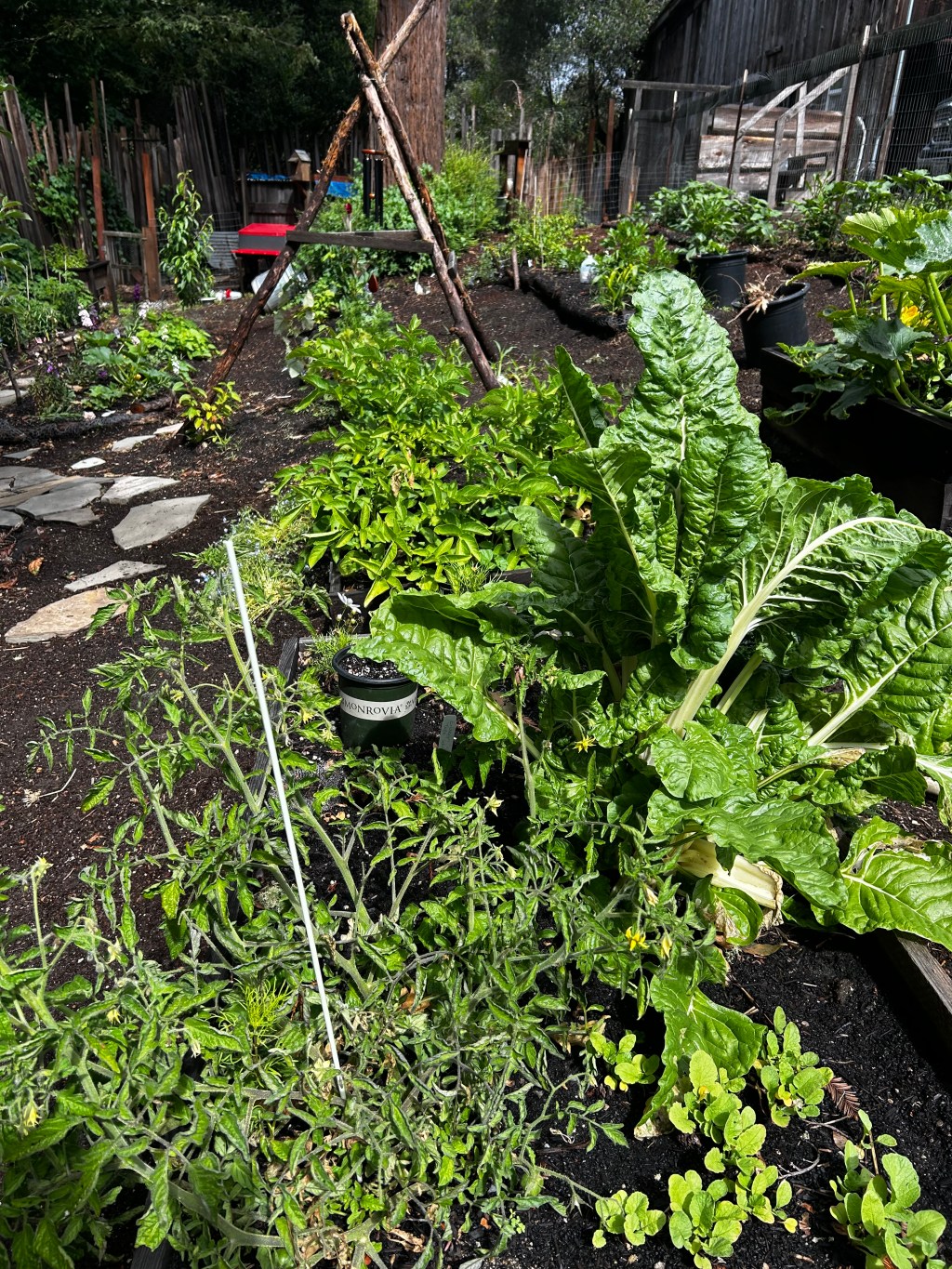
Powdery mildew isn’t caused by wet leaves. That’s the myth that keeps coastal California gardeners baffled every August — we’re barely watering, it hasn’t rained since April, and yet the squash patch looks like someone dusted it with flour. The truth is that this particular fungus loves warm days, cool nights, and humid air on dry leaves, which is a pretty exact description of a foggy summer near the redwoods.
Why Does It Show Up in August Specifically?
The spores need daytime temperatures in the 60s to 80s and nighttime humidity above about 90% to really take hold. In zone 9b along the coast, that combination arrives right when the marine layer settles in for the late-summer stretch — warm afternoons, fog by evening, dew by dawn. Add a squash plant that’s now big enough to shade its own lower leaves, and you’ve built a greenhouse for it.
Once you see white patches, the fungus has already been established for roughly a week. It won’t kill the plant outright, but it steals photosynthesis, and a badly infected squash or cucumber vine will stop setting decent fruit weeks earlier than it should.
What Actually Slows It Down?
There is no cure — you’re managing it, not curing it. These are the things that make a real difference:
- Cut off the worst leaves. Remove the oldest, most infected lower leaves and put them in the trash, not the compost. Taking out 20–30% of the leaves feels drastic and helps enormously.
- Open the plant up. Prune a few interior leaves and lift sprawling vines off the soil so air can move through. Stagnant air under a dense canopy is the whole problem.
- Spray in the morning, not the evening. Leaves need to dry before the fog comes in. Anything applied at 6 p.m. sits wet all night.
- Use a potassium bicarbonate spray (1 teaspoon per quart of water, plus a drop of dish soap). It shifts the leaf surface pH enough to knock back active spores. Baking soda works in a pinch but is harsher on the plant over time.
- Water the soil, not the plant. Drip or a wand at the base, always.
What Should I Do Differently Next Year?
Most of the battle is won at planting time:
- Choose resistant varieties — ‘Success PM’ and ‘Dunja’ zucchini, and ‘Marketmore 76’ cucumber, all hold out noticeably longer than standard types.
- Space squash 3 feet apart minimum. Crowding at planting is what you’re paying for in August.
- Plant where morning sun hits first, so dew burns off early.
- Start spraying preventively in early July, before you see a single white spot. It works far better as prevention than as rescue.
Those resistant varieties and their sowing windows are on sheet 2 of my free printable planting calendar, if you want it written down somewhere you’ll actually see it next April.
If your zucchini is already frosted white, don’t despair over it — pull the ugliest leaves, keep harvesting, and let the plant ride out however many more weeks it has in it. Some seasons that’s just the deal we make for living in the fog.
Is the mildew winning at your place this year, or are you holding it off?

