
A tomato doesn’t crack because of heat, or disease, or bad luck. It cracks because the fruit’s skin stopped growing days before the inside did — and almost always because the plant went dry, then got soaked. In August, that’s a watering rhythm problem, not a plant problem.
What Causes the Cracks?
Tomato skin sets its size early in ripening and then loses elasticity. When a thirsty plant suddenly takes up a big volume of water, the flesh swells faster than that skin can stretch, and it tears. There are two patterns worth knowing:
- Concentric cracks — rings circling the stem end. Usually a fast, dramatic swing in soil moisture, like a dry week followed by a deep soak.
- Radial cracks — splits running down from the stem. These tend to be the deeper, uglier ones, and they’re the ones that let in rot and fruit flies.
Fruit at the blush stage — that first hint of color — is the most vulnerable. A tomato that’s still hard green will usually shrug off a swing that would split a nearly-ripe one.
How Often Should You Water Tomatoes in August?
Consistency beats volume. A plant that gets a moderate drink on a predictable schedule will outperform one that swings between bone-dry and flooded, even if the flooded one gets more total water.
- Aim for deep and infrequent, not shallow and daily. For an established in-ground plant, roughly 1 to 1.5 inches of water a week, delivered in two or three sessions, keeps moisture steady down where the roots actually are.
- Check with your finger, not the calendar. Push down two inches at the drip line. Damp means wait. Dry means water.
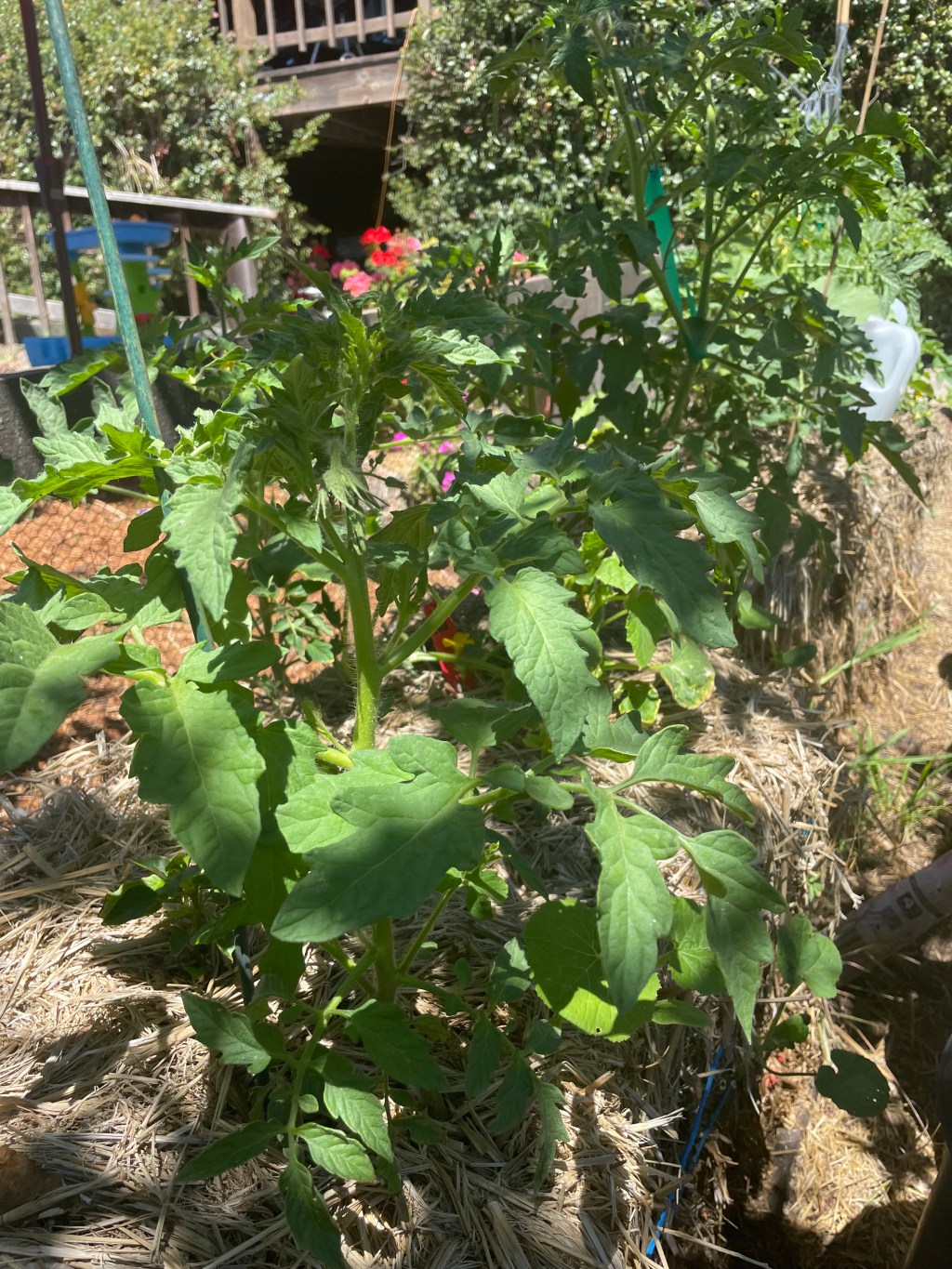
- Mulch is doing half the work. Two to three inches of straw over the root zone can cut evaporation dramatically and buffers the swings that split fruit in the first place. If you do one thing this week, do this one.
- Put drip on a timer. Uneven hand-watering is the most common cause of cracking I see — not neglect, just an irregular schedule.
- Watch after fog or a rare summer rain. Our marine layer can add moisture without you noticing. Skip a cycle rather than stacking water on top of it.
- Pick at first blush during heat waves. A tomato pulled at the blush stage ripens on the counter with the same flavor and won’t split while it does.
Are Split Tomatoes Still Safe to Eat?
Yes, if you catch them fast. A fresh crack with clean, dry edges is fine — cut around it and use the fruit that day. What you don’t want is a split that’s been sitting open in warm weather with soft, cloudy, or fuzzy edges, or one that smells fermented. Those go to the chickens or the compost.
Some varieties are simply more prone to it. Thin-skinned heirlooms like Brandywine and most cherry tomatoes crack in conditions that a Sungold or a Juliet will sail through, so if you fight this every year, it may be worth changing what you plant rather than how you water.
Steady water, thick mulch, early picking. That’s the whole fix.
How are your tomatoes holding up this month?

