
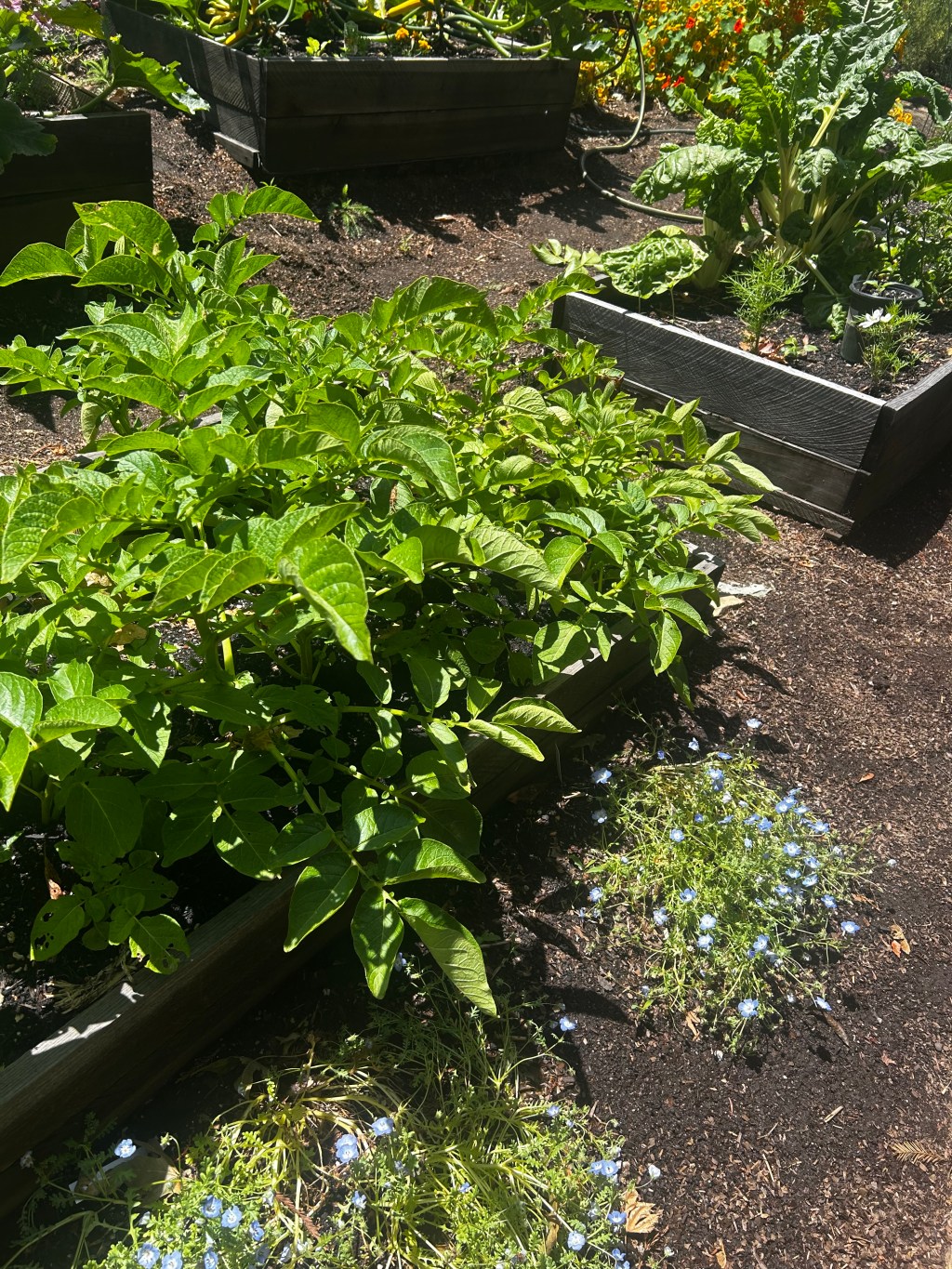
Most raised bed gardeners fill their beds with good soil once in spring and never feed them again. By late July, those beds have been watered dozens of times, and everything that made the soil rich has either been used up by hungry plants or rinsed straight out the bottom.
Why do raised beds run out of nutrients faster than garden rows?
A raised bed is basically a big container. It doesn’t have the deep reserves of native soil underneath it, and it drains faster, which is great for drainage but rough on fertility. Every time you water — and in a zone 9 summer that’s often, especially with wood-sided beds that dry out quicker than you’d think — nutrients leach down and out. Add heavy feeders like tomatoes, squash, or dahlias pulling hard on that soil all season, and it’s easy for a bed to go from lush in May to tired by August.
How do you know your soil needs a boost?
- Lower leaves turning pale yellow while new growth stays green
- Growth that’s noticeably slower than it was in June
- Fewer new blooms or fruit setting, even on healthy-looking plants
- Soil that dries out faster than it used to, sometimes within a day of watering
If you’re seeing two or more of these at once, it’s rarely a pest or disease problem — it’s usually just an empty pantry.
What’s the fastest way to refeed a raised bed mid-season?
You don’t need to dig the bed out and start over. A few simple moves get nutrients back to the roots within days:
- Top-dress with compost. Work a half-inch layer into the top two inches of soil around established plants — roughly a five-gallon bucket for a standard 4×8 bed.
- Use a liquid feed for a quick fix. Fish emulsion or liquid kelp, diluted per the label and applied every two to three weeks, gets nutrients to roots almost immediately.
- Add worm castings around heavy feeders. A cup or two scratched into the soil at the base of a tomato or squash plant makes a noticeable difference within a week or two.
- Mulch after feeding. A two-inch layer of straw or shredded leaves holds moisture and slows down how fast you leach out what you just added.
I try to think of raised beds less like a one-time fill and more like a container garden that needs a check-in every six to eight weeks through the growing season. It’s a small habit, but it’s the difference between a garden that limps to September and one that actually finishes strong.
Is your garden starting to slow down, or is it still going strong?

