
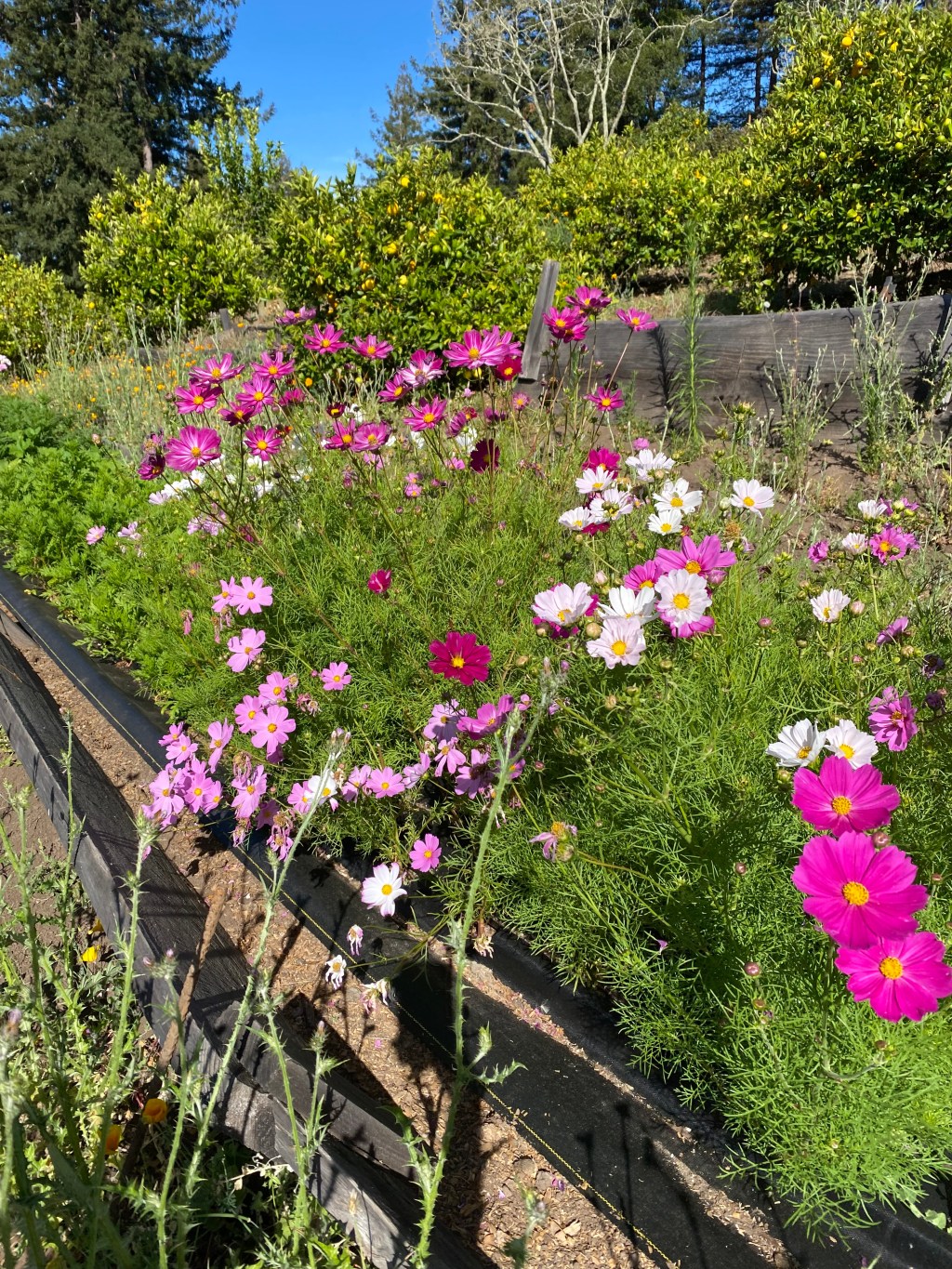
If you garden anywhere near the tree line here in the Santa Cruz Mountains, you already know: deer aren’t shy, and they aren’t picky when they’re hungry enough. I’ve stopped trying to outsmart them and started paying closer attention to what they actually leave standing.
Why Deer Keep Coming Back
Deer pressure tends to spike in mid-to-late summer, when the wild forage up in the hills dries out and a well-watered garden bed starts looking like the best restaurant in town. A single deer can browse several pounds of plant material a day, and once they’ve found an easy meal, they’ll keep coming back to the same spot on a loop, often at dawn and again at dusk. That’s worth knowing, because it means the goal isn’t to eliminate deer from the property. It’s to make your garden less convenient than the alternative.
What Deer Devour First
Tender new growth is always the first casualty, which is why roses, hostas, and young fruit tree leaves get hit hard and fast. Beans, chard, and lettuce are basically deer candy. If you’ve ever planted a row of something soft and leafy only to find it grazed to stubs overnight, that’s the pattern.
Plants Deer Usually Walk Right Past
Deer rely on scent and texture more than taste to decide what’s worth eating, so strongly aromatic, fuzzy, or leathery plants tend to get skipped in favor of softer, blander options nearby. These have held up well for me:
- Rosemary and lavender, both too pungent and resinous for deer to bother with
- Yarrow, which spreads easily and rarely shows a single bite mark
- California native ceanothus, tough enough for the forest edge and largely ignored by browsers
- Salvia and other sages, protected by the same strong scent that keeps deer at a distance
- Bearded iris, whose stiff, fibrous leaves deer generally find unappetizing
- Santolina, a silvery, aromatic groundcover that holds up along exposed borders
- Boxwood, dense and bitter enough to serve as a living fence line
A Few Low-Effort Ways to Protect the Rest
You don’t have to give up soft, tender crops entirely, you just have to be strategic about where they go. Keep vegetables and roses closer to the house, where human activity naturally keeps deer at a distance, and save the outer edges of the property for the plants they skip anyway. If you do use a scent-based repellent, plan to reapply it every 7 to 10 days and after any real rain, since that’s about how long the smell holds up outdoors. And when fencing is worth the investment, remember that deer can clear a standing jump of around 7 feet, so anything shorter is more of a suggestion than a barrier.
None of this makes a garden deer-proof, just deer-resistant, which around here is about as good as it gets. What’s holding up against the deer in your garden this year?

